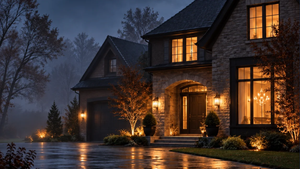
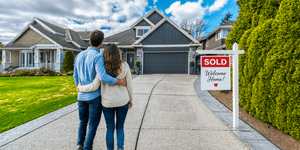
Why Do Turnkey Homes Command a Premium in Greenwich CT?
Buyers relocating from Manhattan and Brooklyn to Greenwich, CT in 2026 are paying a measurable premium for move-in ready homes — not because they can't afford renovation, but because they're psychologically exhausted from city living and unwilling to take on more complexity. Turnkey properties with good natural light, clean layouts, and modernized kitchens and baths attract the highest concentration of buyer demand because they minimize cognitive load at the exact moment buyers are already managing a major life transition. Sellers who deliberately position their home's functional flow and ease of living — not just its finishes — consistently see faster offers and stronger sale-to-list ratios.
By Charles Nedder | June 17, 2026
There's a pattern I keep seeing in the Greenwich market right now, and it's worth understanding if you're thinking about selling.
The buyers coming out of Manhattan and Brooklyn aren't looking for a project. They're not looking for the home that needs work, no matter how beautiful the bones are. What they want — what they'll pay a premium for — is simplicity. The home that's already done.
This isn't a new preference. But in the summer 2026 market, it's become the dominant force shaping where demand concentrates.
The Psychological Tax of City Living
Here's what's happening. Buyers who've spent years in high-friction urban environments — dealing with noise, logistics, constant decisions, and relentless stimulation — are making a move to get their life back. The relocation itself is already a major undertaking. The last thing they want is to add a kitchen gut renovation or a master bath overhaul to that list.
The psychological research on this is consistent: decision fatigue is real, and cognitive load compounds. When someone has already burned through mental bandwidth dealing with a Manhattan lease, logistics of a move, school enrollment decisions, and a compressed timeline — the home that asks them to solve more problems isn't luxury. It's a burden.
The home that removes problems? That's the premium.
I've watched this play out repeatedly with relocation buyers I work with. They'll walk into a home with original bathrooms, good light, and a kitchen that needs updating — and immediately start calculating the renovation budget, the timeline, the contractors, the disruption. That calculation is exhausting. And very often, they walk out.
Then they walk into a home with a modernized kitchen, clean sight lines, and nothing urgent to fix — and they're already mentally moving in. That emotional shift happens in minutes. And it shows up in the offer.
What "Turnkey" Actually Means to This Buyer
It's worth being precise here, because "turnkey" gets used loosely. For the relocation buyer in the $1.5M–$3M range in Greenwich, turnkey isn't about perfection. It's about a specific baseline:
- Abundant natural light — clean windows, unobstructed views, rooms that feel open
- Modernized kitchen and baths — not necessarily custom, but updated within the last several years and functional without immediate investment
- Clean spatial flow — rooms that make sense, circulation that works, no awkward dead-ends or wasted square footage
- Zero urgent projects — no roof that needs replacing next year, no HVAC that's at end-of-life, no deferred maintenance the buyer can see coming
That's the baseline. A home that clears all four of those bars captures a disproportionate share of demand from the highest-intent buyers in the market — and those are the buyers who move fast and compete hard.
Tracking inventory and price movement in real time is how you catch the right moment to list or offer. Download The Charles Nedder Team Real Estate App — live listings, price changes, and market data for Greenwich and the surrounding towns. Get the app here.
How Sellers Should Position for the Turnkey Premium
If you're thinking about selling in Greenwich this year, the implication is direct: the return on pre-listing investment in turnkey readiness is real, and it's measurable in both sale price and days on market.
That doesn't mean you need to renovate the entire house. It means you need to solve the problems that will make a buyer hesitate. The dated master bath that photographs poorly. The kitchen that works but signals "1998" the moment someone walks in. The deferred maintenance item that a buyer will use to justify a low offer or a walk.
It also means how you present the home matters as much as what you do to it. Buyers are looking for ease. Your marketing should demonstrate ease. Not just square footage and bedroom count — but how the home functions, how it flows, what daily life inside it looks like. That framing is what separates a listing that generates momentum from one that sits. If you're wondering why a listing isn't moving, this breakdown of why Greenwich homes aren't selling in 2026 is worth reading — the turnkey gap is often a core factor.
The sellers who understand this dynamic are the ones capturing strong sale-to-list ratios right now. Not because they spent the most money on their home. Because they made it the easiest home to say yes to. Understanding how appraisals work in Greenwich's luxury segment also matters at this stage — turnkey homes tend to appraise more cleanly because they're compared to comparable move-in-ready sales.
What This Means for Buyers
If you're on the buying side, this dynamic has a direct implication for your strategy: the best turnkey homes in Greenwich move fast. You won't have weeks to decide. The 14-day cliff is real — well-positioned homes that hit the market in peak condition, priced correctly, frequently receive offers within two weeks, often multiple.
Which means you need to be ready to move when the right home appears. That means pre-approval locked, search criteria tight, and a clear sense of your own priorities — so you're not wasting time processing decisions you should have already made. The buyers who win in this market are the ones who've done the cognitive work ahead of time. So when the right home shows up, they can say yes quickly.
If you want help understanding how the turnkey premium plays out in specific neighborhoods — what it means for pricing in Old Greenwich versus Cos Cob, Riverside versus Darien — reach out when you're ready. I help buyers and sellers navigate exactly this kind of analysis every day, and the 2026 market rewards the people who understand how demand actually behaves.
Download the app to see what's live, what's new, and where the market is moving — in real time.
About Charles Nedder
Charles Nedder is a top Realtor and Team Leader in Greenwich, CT and Westchester County, NY, specializing in luxury real estate, home sales, and relocation. As CEO of The Charles Nedder Team — the #1 Berkshire Hathaway HomeServices team in Connecticut — he helps clients buy and sell homes with confidence using advanced marketing, market analytics, and strong negotiation. Connect with Charles at www.thecharlesnedderteam.com or call (203) 654-7533.